The House Always Wins: Giannis, Kalshi, and the End of Distance in Sports Betting
If you were watching the trade deadline buzzer-beaters last week, you probably missed the most important transaction in sports. While everyone was arguing about bench depth, Giannis Antetokounmpo was quietly becoming a shareholder in the very company taking bets on his own career. We break down the shift from fans to liquidity and why the "Ticker Symbol" is the new athlete.
If you were busy watching the trade deadline buzzer-beaters last week, you probably missed the most important transaction in sports.
While everyone was arguing about bench depth, Giannis Antetokounmpo was quietly becoming a shareholder in the very company taking bets on his own career.
Last Friday, in a textbook "news dump" move, Giannis announced his partnership with Kalshi.
For the people in the back who aren't betting degenerates: Kalshi isn't a traditional sportsbook. It's a prediction market. Instead of betting on a spread, you're trading shares in real-world outcomes.
Instead of betting on a spread, users trade shares on events. Will inflation rise? Will a hurricane hit Florida? Will a superstar get traded?
Last Thursday, thousands of users were trading Yes or No contracts on whether Giannis would be moved. More than twenty three million dollars flowed through that single question.
By Friday, Giannis became a part owner of the company that collected the fees on those trades.
He was not the gambler.
He was the landlord of the floor where the gambling happened.
The Powerball Problem
That is the level we have reached.
Giannis did not just sign an endorsement deal. He took an equity stake in the infrastructure itself. He is no longer just a player at the high stakes table. He owns the chairs.

Under the new Collective Bargaining Agreement, this is legal. But legal does not mean it is not a glitch in the matrix.
He is not just surviving the trade rumors anymore. He is monetizing the volatility of his own life.
The New DNA: Economic Alignment
Before pointing fingers at the Greek Freak, understand this. He is not the villain. He is the first mover.
The rules of engagement have changed.
Look at the relationship between the NFL and ESPN. This is not just a broadcast partnership. It is total economic alignment.
When leagues and networks swap equity, their incentives stop competing and start merging.
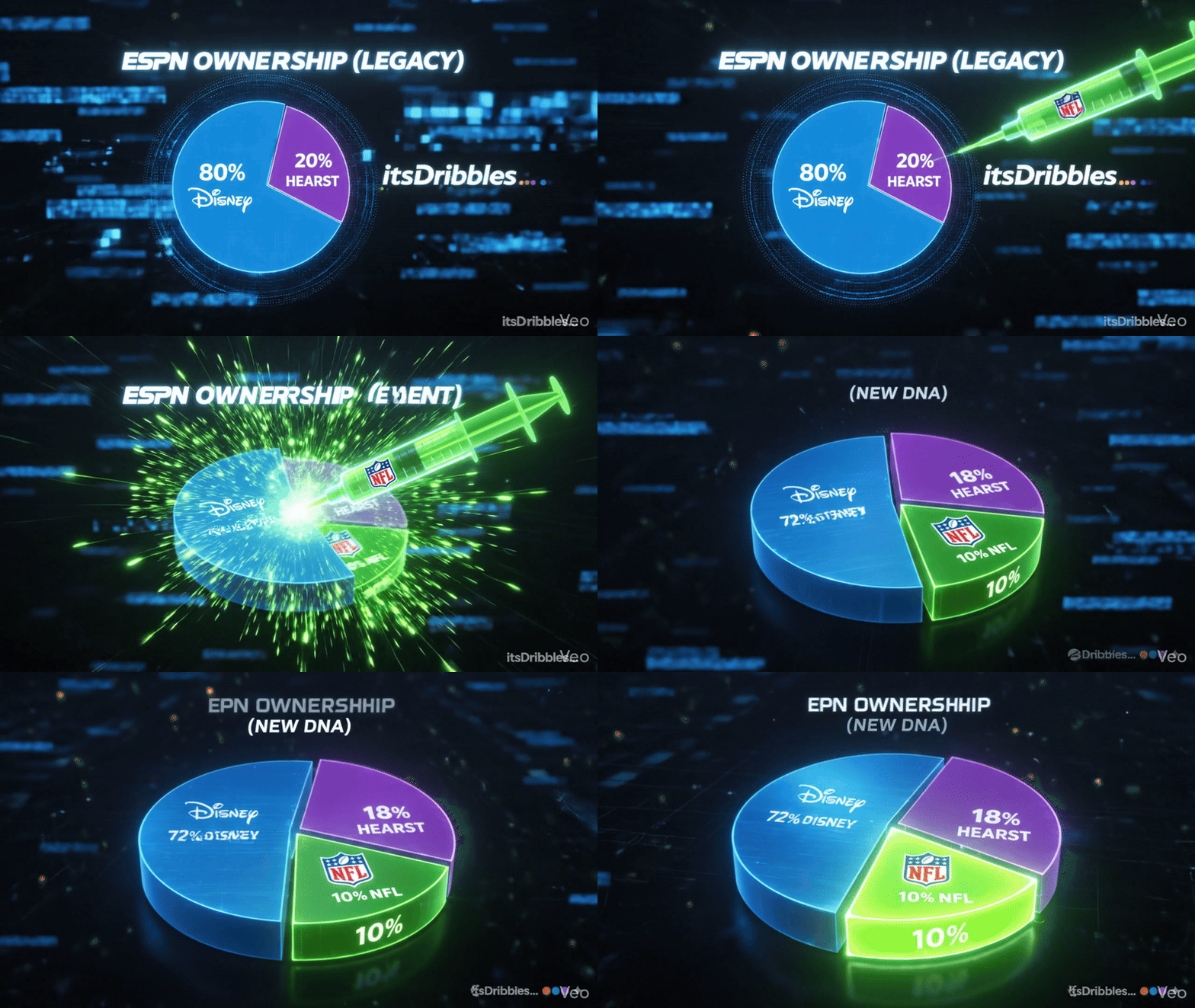
The League provides the content.
The Network provides the hype.
The Sportsbook (ESPN Bet) provides the toll booth.
The house, the ref, and the broadcaster all eating from the same trough.
The New Arena: From Fans to Liquidity
We need to stop calling this a "sports world" and start calling it what it actually is: A high-frequency trading floor.
In this new market, the game on the court is just a prompt.
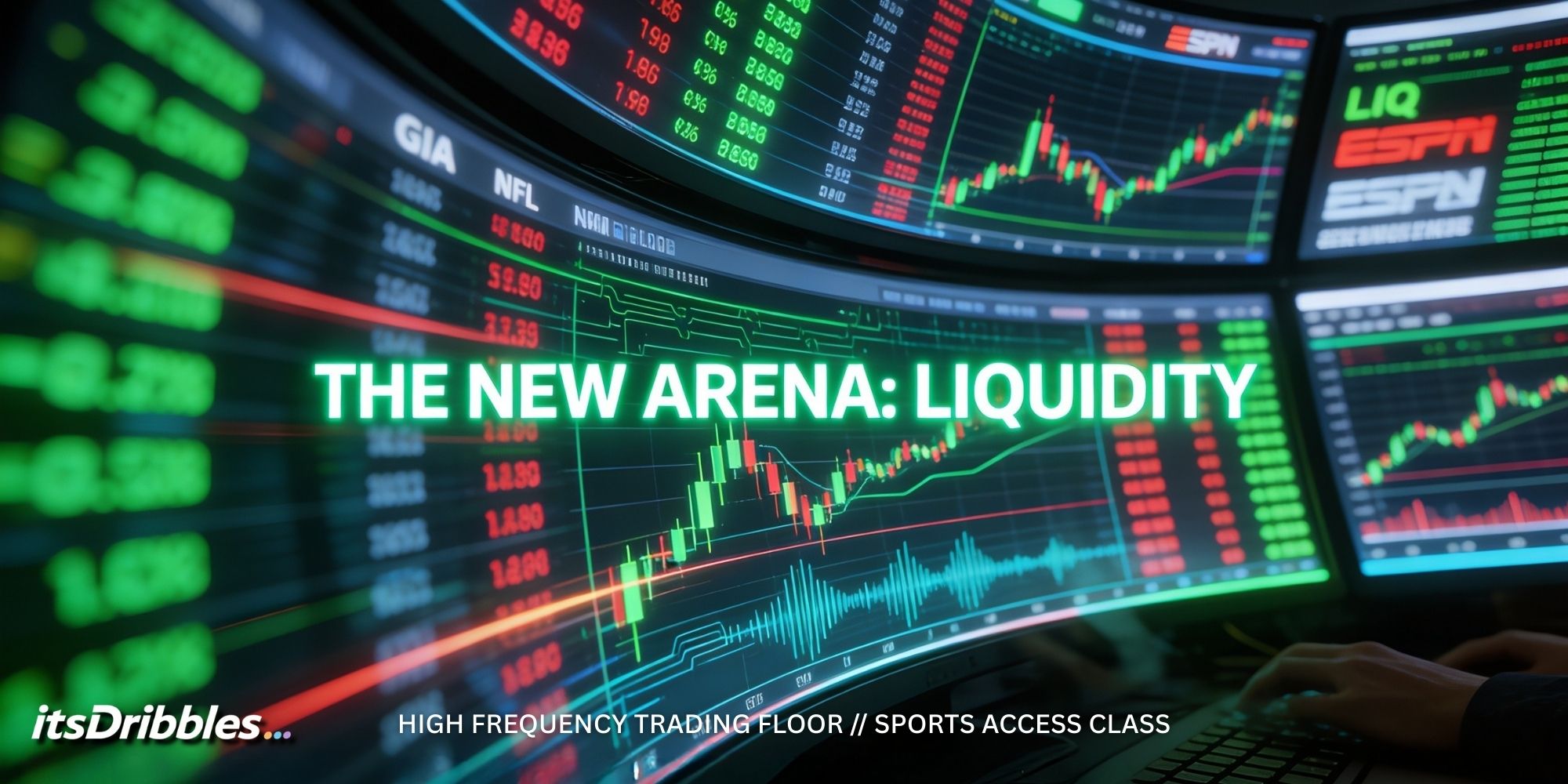
The Player isn't just an athlete; they are the Ticker Symbol.
The Game isn't a contest of will; it's a Live Volatility Index.
The Fan? You aren't a spectator anymore. You are the Liquidity.
Every engagement, every bet, and every emotional reaction is just fuel for the machine.
An individual athlete gets punished for trying to influence outcomes. But when the billionaires align their incentives, we call it "synergy."
Why This Is a Problem Even If Everything Is Legal
Markets run on trust. And trust requires distance.
Fans already tolerate athletes endorsing sportsbooks. What they have never been asked to tolerate is athletes owning the infrastructure that profits from speculation about their own futures.
Even if Giannis never touches an NBA related contract, the incentive structure has already shifted.
Kalshi benefits when volatility increases. Rumors drive uncertainty. Uncertainty drives volume. Volume drives fees.
That means the platform performs best when fans do not know what is real.
And now, one of the league’s biggest stars sits on the ownership side of that equation.
This is not about fixing games. It is about shaping narratives.
When the same ecosystem includes the player, the media arm telling his story, and the exchange monetizing speculation about that story, the line between observation and participation disappears.
The danger is not corruption you can prove.
It is legitimacy you slowly lose.
Giannis isn't "rigging" the game. He's just tired of being the product.
So he bought a piece of the house.
And in 2026, the house always wins.
Get the next one
New pieces from me, in your inbox.